

Learning is something we do all the time; it is natural and organic.
My nieces love juice, so I always have some in my fridge when they come over. When my youngest niece was small, I was responsible for putting the straw into the juice box. Then, one day, she looked at me and said, “No, Auntie Nay. I can do it.” She missed a few times, the straws got bent, and we even lost a bit of juice, but she kept working to figure it out. She wanted to do it, and that was the motivation she needed.
That’s what learning looks like when there is a felt need or purpose to learn. We are more engaged when learning matters to us. This is true in life and should be true in school as well.
For students, authentic learning begins the same way, by hooking them with an open-ended, real-world problem or challenge that doesn’t have a single correct answer and actually requires complex thinking. This is where PBL shines. When students are given a meaningful problem to solve or a challenge to tackle, they develop a felt need to learn. They want the content because they need it to move forward. That shift from compliance to curiosity is essential for learning! This isn’t about letting go of teaching; it’s about facilitating learning with intention.
How PBL Turns Engagement into Learning (Not Just Activity)
Strong PBL is designed, not improvised. Regardless of which “P” you lean into—problem-, project-, place-, phenomena-, profession-, or pursuit-based learning—the structure matters. Six key phases guide the experience:
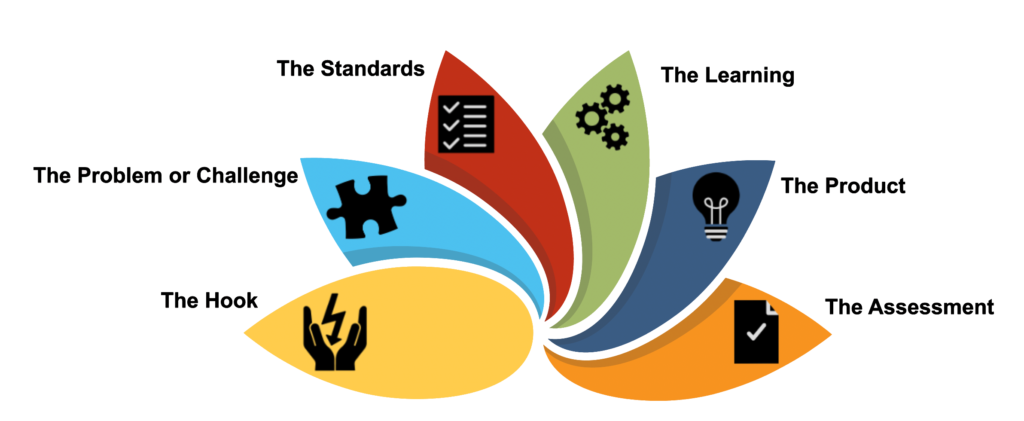
- The Hook: Spark curiosity with compelling visuals, data, or stories that make students say, “Wait . . . what?”
- The Problem or Challenge: Keep it open-ended, tied to a real-world audience, and focused on a meaningful product.
- The Standards: Standards aren’t an afterthought; they’re embedded naturally when the problem is well-designed.
- The Learning: This is where teaching happens. Differentiated activities, small-group instruction, ELL supports, and formative assessment meet students where they are.
- The Product: Students create something that demonstrates understanding and builds efficacy (the confidence to tackle complex challenges).
- The Assessment: The project isn’t the grade. Transfer tasks assess whether students can apply their learning in a new context.
PBL transforms instruction from content delivery to experience design. Teachers aren’t stepping back; they’re leaning in: facilitating, questioning, adjusting, and teaching with purpose.
Why This Matters for Generation Alpha
In a world shaped by AI, instant information, and constant interaction, students don’t need more content thrown at them. They need learning experiences that demand thinking, curiosity, fact-finding, decision making, and relevance. PBL creates that space by design. When students see the purpose behind what they’re learning and feel ownership over how they learn it, engagement stops being the goal and becomes the outcome.
And honestly? That’s not just good for Generation Alpha. It’s good teaching.
Learn more
Check out this video that previews our latest Professional Learning Experience: Teaching Through the 6 Ps of PBL, or join our next Virtual Learning Community: Designing PBLs that starts January 5, 2026!
 In this course, participants will leverage choice and technology to provide students with the ultimate differentiated learning environment. They will develop differentiated digital activity lists rooted in rigorous instruction that offer multiple ways to learn and apply content. Participants will explore autonomy, purpose, and mastery as motivators in all learning environments. They will design differentiated activity lists to put students in charge of their own learning, creating a structure that allows students to make decisions within a structured framework. Making informed decisions is an essential life skill that teachers can support with intentional classroom practices.
 Participants in this course will use Reinventing the Classroom Experience by Dr. Nancy Sulla as a resource. The assigned book must be